How to Clean a Stainless Steel Thermos That Smells Like Coffee
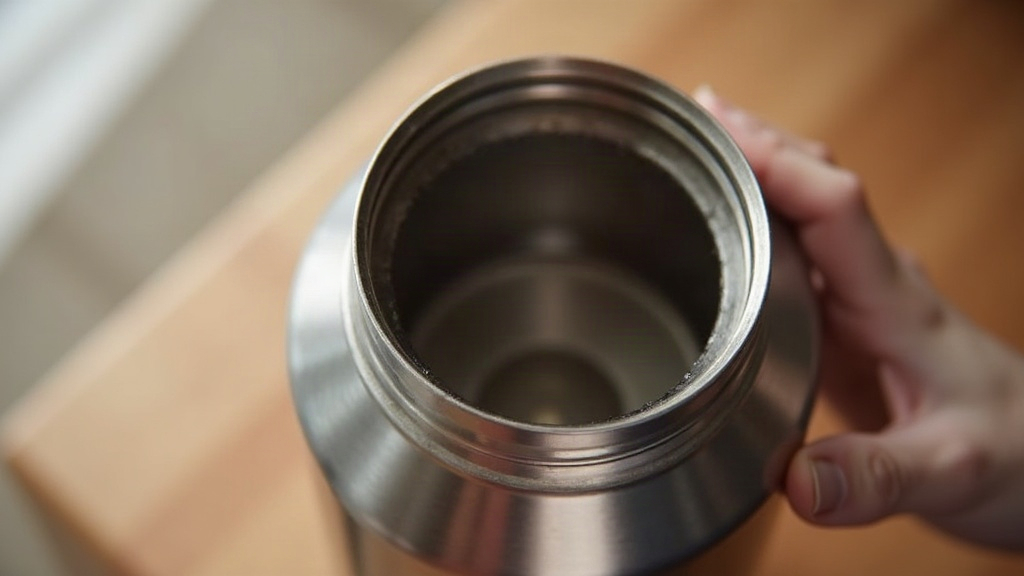
If your stainless steel thermos still smells like last week’s coffee no matter how many times you rinse it, the lid isn’t your problem. It’s the microscopic coffee oils and tannins that have quietly built up on the inner walls. The good news: a few pantry staples, baking soda, vinegar, or even denture tablets, paired with proper drying technique, will get rid of the smell for good. Here’s how.
Why Thermoses Start to Smell
Stainless steel itself is non-porous, but coffee isn’t just water. It carries oils and tannins that leave behind a thin film over time, and that film loves to collect in the narrow neck and around the lid threads where a brush or sponge rarely reaches. Seal that thermos up while it’s still a little damp, and the film starts to ferment, which is exactly why you get that sour, musty coffee smell. A quick wash with dish soap won’t cut it here. Soap just isn’t built to break down oily residue like that.
Step 1: Disassemble Everything
Before you even think about scrubbing, take the thermos apart completely:
- The lid, including rubber gaskets or silicone seals
- Any straw or spout attachments
- The rubber base ring (some models have one)
Nine times out of ten, the odor is hiding in these small parts, not the main body.
Step 2: Baking Soda + Hot Water Soak
This is your go-to, works-almost-every-time method:
- Fill the thermos with hot (not boiling, that can damage insulation seals) water.
- Add 2–3 tablespoons of baking soda.
- Stir with a long-handled spoon, then let it sit for 1–2 hours, or just leave it overnight.
- Dump the solution and scrub with a bottle brush.
- Rinse thoroughly and air dry with the lid off.
Baking soda doesn’t just cover up the smell. It actually neutralizes the acidic compounds causing it.
Step 3: White Vinegar for Stubborn Stains
Still seeing brown staining after the baking soda soak? Try this:
- Fill the thermos halfway with white vinegar, halfway with warm water.
- Let it sit for 30 minutes.
- Scrub gently, a non-abrasive brush or the rough side of a sponge works fine.
- Rinse well. The vinegar smell fades fast once it’s rinsed and dried.
One caveat: skip vinegar if your thermos has a copper lining (rare, but check the manufacturer’s instructions first). The acid can eat into certain interior coatings.
Step 4: Denture Tablets or Effervescent Cleaners
Want the lazy-but-effective option?
- Drop 1–2 denture tablets (or a stainless-steel-safe effervescent cleaning tablet) into the thermos.
- Fill with warm water.
- Let it fizz for 15–30 minutes.
- Rinse thoroughly.
This trick is a lifesaver for narrow-necked thermoses where a bottle brush simply can’t reach the bottom.
Step 5: Don’t Forget the Lid and Threads
Here’s the part people skip, and it’s usually the actual source of the smell: the silicone gasket in the lid. Pull it out if you can and:
- Soak it separately in warm, soapy water.
- Scrub the grooves with an old toothbrush.
- Let it dry completely in the open air before putting it back. Trapped moisture is basically an odor factory.
How to Prevent Future Coffee Smell
- Rinse right after use. Don’t let coffee sit in there for six hours while you’re at your desk.
- Air dry with the lid off overnight instead of sealing it up damp.
- Run a baking soda soak once a week if you’re using the thermos daily.
- Skip the dishwasher unless the manufacturer explicitly says it’s safe. The heat can warp insulation seals.
- Store it with the lid off in the cabinet. Never fully closed when it’s not in use.
What NOT to Use
- Bleach. It can react with the stainless steel, leaving a metallic smell or damaging the insulation layers.
- Steel wool. It scratches the interior, and those scratches become new hiding spots for oil.
- Strong citrus-oil cleaners. They leave their own scent behind, which mixes badly with leftover coffee residue.
Final Thoughts
A thermos that smells like stale coffee isn’t ruined, it just needs a real deep clean instead of a 10-second rinse. Do the baking soda soak, follow up with vinegar if the stains are stubborn, and build the habit of air-drying it with the lid off. That’s really all it takes. A few extra minutes a week, and your thermos goes right back to smelling like, well, nothing, exactly the way it should.