How to Clean and Disinfect a High Chair Without Residue
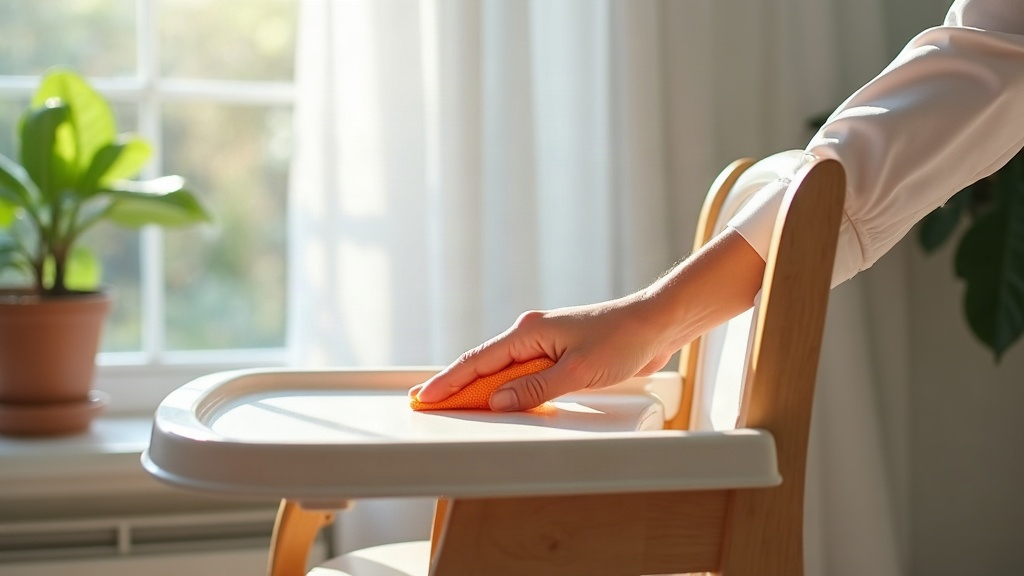
Cleaning a high chair after every meal sounds simple, right up until you’re digging dried oatmeal out of the tray crevices or wiping away that tacky film your spray cleaner left behind. Here’s the good news: with the right routine and the right products, you can clean and disinfect a high chair properly in under five minutes, with zero soapy residue for your baby to find later with their hands (and then their mouth).
Why Residue Is the Real Problem
Most parents clean the high chair and call it done, skipping the rinse step entirely. That leaves a thin film of soap or disinfectant sitting on the tray and straps. Babies touch these surfaces constantly, then stick their fingers right in their mouths. So residue isn’t just an eyesore, it’s a genuine irritant risk, maybe even a chemical exposure issue if you’re using something stronger than dish soap. The goal here isn’t just “clean.” It’s clean and residue-free.
The 3-Step Daily Routine
1. Scrape and Pre-Wipe
Right after the meal, grab a spatula or a paper towel and knock off any loose food before it has a chance to dry and cement itself in place. Dried rice cereal, crusted yogurt, whatever it is, it’s exponentially harder to scrape off an hour later. Do this step and you save yourself time down the line, guaranteed.
2. Wash With Warm Soapy Water
- Pull the tray off if it detaches, and wash it in the sink with warm water and a few drops of mild dish soap.
- Grab a soft brush or a microfiber cloth and get into the tray grooves, the buckle slots, and under the seat edges. These spots are where sour-smelling gunk loves to hide.
- Rinse it thoroughly under running water. Honestly, this is the step everyone rushes through, and it’s the number one reason film gets left behind.
3. Disinfect, Then Rinse Again
You don’t need anything harsh for daily disinfecting:
- White vinegar solution (one part vinegar, one part water) works as a safe, cheap, everyday disinfectant. No fumes, no mystery ingredients.
- Diluted baby-safe disinfectant wipes marked “no-rinse” are okay for a quick pass, but if the label doesn’t explicitly say food-contact safe, rinse it off anyway. Better safe than sorry.
- Spray or wipe the surface, let it sit for a full 60 seconds (this is what actually kills germs, not the spraying itself), then go over it again with a clean, damp cloth.
Deep Cleaning Once a Week
Even if you wipe down daily, grime finds its way into seams and straps eventually.
- Straps and harness: Hand wash in warm water with a drop of baby-safe detergent, then let them air dry completely before reattaching. Skip the washing machine for foam-backed straps, the padding breaks down fast under that kind of agitation.
- Tray hinges and crevices: An old toothbrush dipped in diluted vinegar works wonders on the buildup hiding in the hinges.
- Seat cushion: If it’s removable and machine washable, check the tag and follow it. Air dry whenever you can, it protects the fabric and any waterproof lining underneath.
What to Avoid
- Bleach on plastic trays: Over time it breaks down certain plastics and leaves behind a chemical smell that transfers straight into food.
- Abrasive scrubbers: Steel wool, rough sponges, anything gritty, these scratch the plastic and carve tiny grooves where bacteria set up camp.
- Skipping the rinse step: Even “natural” cleaners need a rinse if they foam up or leave any visible film. Vinegar included.
- Spraying near food zones: Pull the tray off or cover the seat area before you spray anything. Overspray drifting onto spots your baby’s hands and mouth will touch is exactly what you’re trying to avoid.
Quick Troubleshooting
- Sticky residue even after wiping? You probably need a second pass with plain water. One wipe just isn’t enough when you’re dealing with sugary foods like juice or fruit puree.
- Lingering sour smell? Soak the removable parts in a vinegar-water solution for 10 to 15 minutes before washing them.
- Mold in the tray seams? Mix baking soda and water into a paste, work it into the seams, let it sit 5 minutes, then rinse. Usually clears it right up, no harsh chemicals needed.
Conclusion
A genuinely clean high chair has nothing to do with how strong your cleaner is. It comes down to consistent scraping, washing, disinfecting, and always, always finishing with a thorough rinse. Follow this daily three-step routine, add a weekly deep clean on top, and mealtime stays hygienic with no lingering residue for your baby to come into contact with.