Citric Acid vs Vinegar: Best Way to Clean a Humidifier
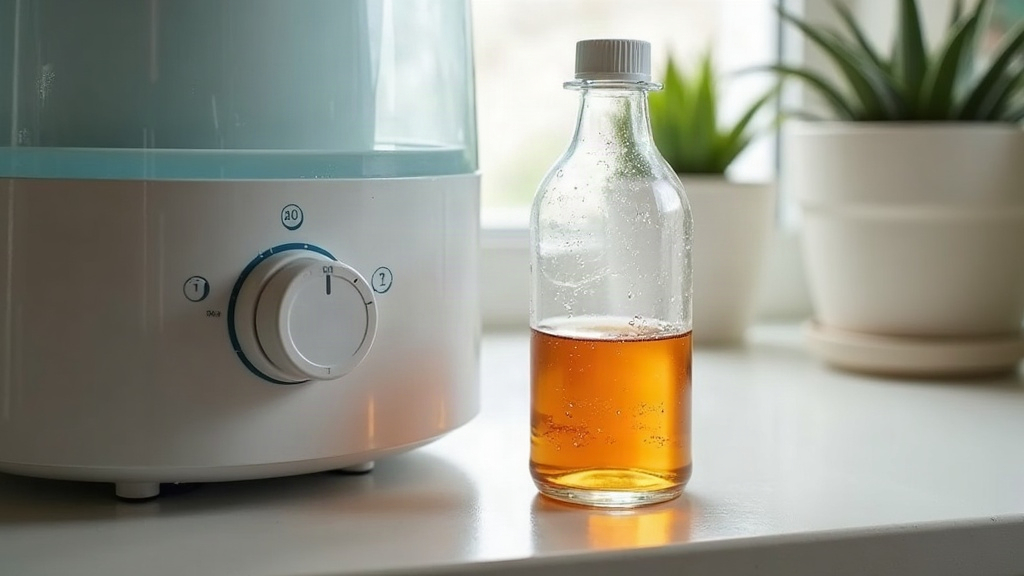
If your humidifier’s tank, base, or ultrasonic disc has that crusty white film on it, you’re looking at limescale, mineral buildup from hard water. Both citric acid and white vinegar will dissolve it, but they’re not interchangeable in practice. Citric acid works faster, smells like nothing when you’re done, and treats rubber seals more kindly over time. Vinegar costs less and sits in nearly every kitchen cabinet already. Here’s the breakdown of each method, and which one actually makes sense for your situation.
Why Humidifiers Build Up Mineral Scale
Tap water carries dissolved calcium and magnesium, whether you notice it or not. As your humidifier turns that water into mist, through evaporation or ultrasonic vibration, those minerals don’t go anywhere. They stay behind and pile up as:
- White dust settling on nearby furniture (mineral particles riding along in the mist)
- Chalky crust along the tank walls and waterline
- A cloudy film coating the ultrasonic transducer disc, which quietly chokes off mist output
Ignore it long enough and that buildup becomes a breeding ground for bacteria and mold. At that point your humidifier stops helping your air quality and starts working against it.
Citric Acid Method
Citric acid is the same natural acid found in lemons, sold as a plain white powder. Gram for gram, it outperforms vinegar as a descaler, meaning it eats through scale in less time.
How to use it:
- Dissolve 1–2 tablespoons of citric acid powder per 1 liter of warm water.
- Pour the solution into the tank and base reservoir, making sure it covers every scaled surface.
- Let it sit for 20–30 minutes. Thick, calcified gunk might need a full hour.
- Scrub gently with a soft brush or an old toothbrush to knock loose whatever’s left.
- Rinse 3–4 times with clean water, no shortcuts here, until every trace of acid is gone before you refill it.
Pros:
- No lingering smell afterward (vinegar can’t say the same)
- Cuts through thick, calcified deposits noticeably faster
- Easier on rubber gaskets and plastic when you clean this way repeatedly
- Powder form means you can measure it out precisely
Cons:
- You’ll need to buy it separately; it’s not sitting in everyone’s pantry
- Takes a bit more prep since it has to dissolve first
Vinegar Method
White distilled vinegar, 5% acetic acid, is the old standby for DIY descaling. It’s cheap, it’s already in your kitchen, and for light-to-moderate buildup it does a solid job.
How to use it:
- Mix equal parts white vinegar and water. For heavy scale, skip the dilution and use it straight.
- Fill the tank or base and let it soak, anywhere from 30 minutes to 2 hours depending on how bad the buildup is.
- For spots that won’t budge, dip a soft cloth or cotton swab in vinegar and work at them directly.
- Rinse thoroughly, at least 3-4 times. Vinegar’s smell sticks around in plastic if you don’t flush it out completely.
- Run the humidifier with plain water (no mist mode) for a few minutes afterward to clear any last residue.
Pros:
- Costs nothing extra since it’s already in most kitchens
- Fine for routine, light cleaning you do every week or two
- Has natural antibacterial properties, so it helps keep mold at bay too
Cons:
- That sharp smell can linger in plastic parts and even get carried into the mist if rinsing is incomplete
- Takes longer to break down thick, calcified scale
- Using it undiluted too often can wear down rubber seals over months of repeated cleaning
Citric Acid vs Vinegar: Quick Comparison
| Factor | Citric Acid | Vinegar |
|---|---|---|
| Descaling power | Stronger, faster | Moderate, slower |
| Smell | None | Strong, needs rinsing |
| Cost | Low (bulk powder) | Very low (pantry item) |
| Gentleness on parts | Gentler long-term | Can wear rubber if overused |
| Best for | Heavy, calcified buildup | Light, routine cleaning |
Which Should You Use?
- Heavy, chalky, stubborn scale: Reach for citric acid. It breaks down calcium deposits faster and walks away without leaving a smell behind.
- Weekly or biweekly upkeep: Vinegar works just fine, and it’s more convenient since there’s a good chance it’s already under your sink.
- Ultrasonic humidifiers with a delicate transducer disc: Citric acid is the safer bet over the long haul. Vinegar’s acidity, applied repeatedly, can wear away the coating on that disc.
General Cleaning Tips for Any Method
- Unplug the humidifier before you touch it, every single time.
- Skip bleach entirely on ultrasonic components. It can damage the transducer.
- Clean the unit at least once a week, and more often if your tap water is particularly hard.
- Switch to distilled or demineralized water. This alone will slow future buildup dramatically, sometimes cutting your cleaning frequency in half.
- Let every part air-dry completely before putting the humidifier back together. Skip this and you’re inviting mold.
Conclusion
Citric acid and vinegar both clear mineral buildup, but they’re suited to different jobs. Need a fast, odor-free deep clean, especially on an ultrasonic model? Citric acid wins. Just doing routine upkeep with stuff you already have on hand? Vinegar gets it done. Either way, rinse thoroughly afterward and make the switch to distilled water. That one change does more to keep scale from coming back than anything else on this list.