Cast Iron vs. Enameled Dutch Oven: Cleaning and Seasoning Compared
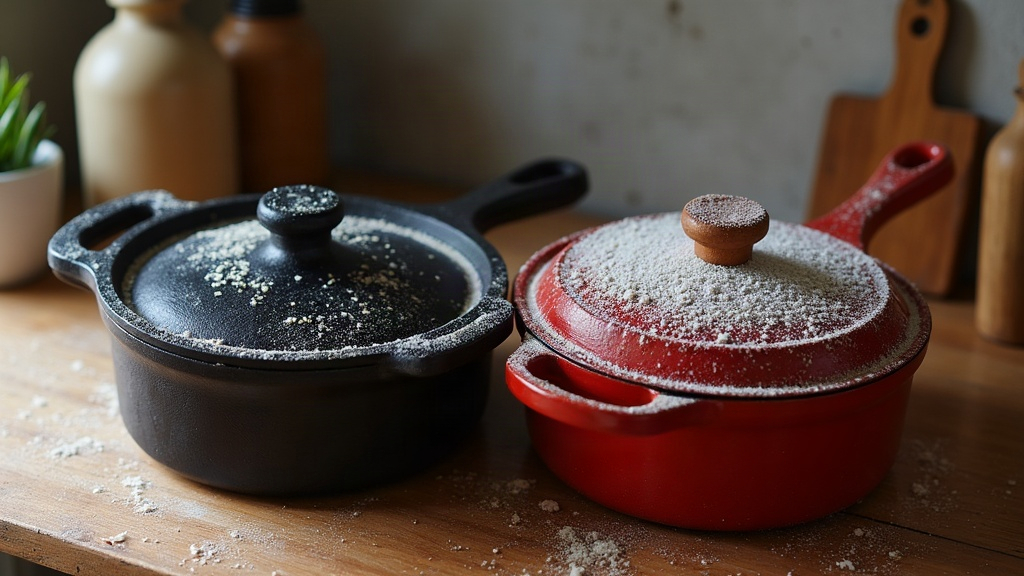
If you’re picking between a bare cast iron Dutch oven and an enameled one, the real difference isn’t looks, it’s upkeep. Bare cast iron wants regular seasoning and a thorough dry-off every single time, or rust creeps in within days. Enameled cast iron skips seasoning altogether but punishes rough scrubbing with dull spots and scratches. Both will outlast you if treated right, but the care routines are almost opposites, and picking the wrong one for how you actually cook can mean rust stains, a chipped rim, or just constant low-grade annoyance.
The Core Difference
A traditional cast iron Dutch oven is raw, porous, reactive metal. Skip the seasoning and food sticks, moisture rusts it, and the surface turns rough and orange within a week of neglect. An enameled Dutch oven, think Le Creuset or Staub, has a fused glass layer baked onto the iron so the cooking surface never actually touches bare metal. That glass coating is the whole reason the cleaning rules flip.
Cleaning: Side-by-Side
Bare Cast Iron
- Never soak it. Standing water for even 20 minutes is the fastest way to invite rust.
- Clean it while it’s still warm, using hot water and a stiff brush or a chainmail scrubber.
- A drop of mild soap now and then won’t hurt (that old “soap ruins seasoning” myth doesn’t hold up with modern dish soap), but don’t make it a daily habit.
- Dry it immediately and completely. A dish towel alone won’t cut it. Set it on a burner for a minute or two so any hidden moisture evaporates.
- While it’s still warm, rub in a thin coat of oil to protect the surface.
- For stuck-on food, simmer a few cups of water in the pot for a few minutes, then scrape gently with a wooden or plastic spatula.
Enameled Cast Iron
- Soaking is totally fine here, no rust to worry about on glass.
- Warm water, dish soap, and a non-abrasive sponge do the job.
- Burnt-on bits? Add water plus a spoonful of baking soda, simmer for 10-15 minutes, then scrape with a wood or nylon tool.
- Skip metal scouring pads and abrasive powders entirely. They scratch the glaze in ways you can’t always see, and those tiny scratches trap stains later.
- Dark staining or discoloration looks bad but isn’t harmful. A baking soda paste left on for 15 minutes usually clears most of it.
- Most enameled pots survive the dishwasher, but hand-washing keeps that glossy shine going much longer.
Seasoning: One Needs It, One Doesn’t
For bare cast iron, seasoning isn’t a one-and-done chore, it’s an ongoing relationship:
- Wash the pot and dry it thoroughly.
- Rub a thin layer of a high-smoke-point oil (grapeseed, flaxseed, or plain vegetable oil work well) over every surface, inside and out.
- Wipe off the excess. If it looks shiny and wet, you used too much. It should look matte, almost dry to the eye.
- Bake it upside down at 450-500°F (230-260°C) for an hour, then let it cool inside the oven.
- Repeat this every couple of months, or sooner if the surface looks dull or food starts clinging to it.
Enameled Dutch ovens need none of this. The factory glaze is a permanent barrier, so there’s nothing to build up or maintain. Honestly, this is the main reason so many people default to enameled: pull it out of the box, cook dinner that night, and it still looks and performs the same twenty years later with nothing more than basic washing.
Durability and Long-Term Care
| Factor | Bare Cast Iron | Enameled Cast Iron |
|---|---|---|
| Rust risk | High if not dried/oiled | None |
| Chipping risk | Very low | Possible if dropped or knocked on hard edges |
| Heat tolerance | Extremely high, safe empty on high heat | Can crack with rapid temperature swings or high dry heat |
| Maintenance frequency | Regular (weekly/monthly touch-ups) | Minimal (just cleaning) |
| Acidic food (tomato, wine) | Can strip seasoning, affect taste | No issue, enamel is inert |
Which One Fits Your Routine?
- Go bare cast iron if a few extra minutes of drying and oiling per use doesn’t bother you, you want the best possible heat retention for searing a steak, and you don’t mind the pot developing its own dark, seasoned patina over the years.
- Go enameled if tomato sauces and wine braises are a regular part of your cooking, you want something lower-maintenance, or you like the idea of a pot pretty enough to carry straight from stove to dinner table.
Quick Troubleshooting
- Rust spots on bare iron: Scrub it out with steel wool, wash, dry thoroughly, and re-season right away, don’t wait.
- Sticky residue on bare iron: That’s usually too much oil in the seasoning layer. Bake it at high heat to burn off the excess, then redo it with a thinner coat.
- Enamel staining: Purely cosmetic. A baking soda paste, or for white interiors, a diluted bleach soak, brings back the brightness.
- Enamel chip: Stop cooking in it if the chip goes down to bare metal on the cooking surface. Rust can start underneath the glaze where you can’t see it.
Conclusion
Both styles can genuinely last a lifetime, but they ask for very different kinds of attention. Bare cast iron rewards the person who’s willing to dry it, oil it, and occasionally re-season it, paying you back with unbeatable heat performance and a friendlier price tag. Enameled Dutch ovens trade that ritual for convenience: easier cleanup, zero seasoning, just a bit more care around drops and thermal shocks to protect the glaze. Be honest about how much maintenance you’re actually going to do, and whichever one you pick will earn its place in your kitchen for years.